-1.png?w=800&h=800)
One of the most common questions we hear from new clients is:
"Why does a handbag sample take 15–20 days to develop?"
For buyers who are new to handbag manufacturing, the timeline can seem surprisingly long.
However, experienced handbag manufacturers know that the biggest risk is not spending a few extra days on development—the biggest risk is producing the wrong sample.
The Biggest Cost Is Not Making the Sample — It's Making the Wrong Sample
Many buyers send only a rendering, a Pinterest image, or a reference photo and expect the factory to begin immediately.
In reality, a professional development team will first review the design and identify missing information.
Example: The Missing Laptop Size
A client once requested a laptop tote bag and provided only the exterior design.
The development team asked:
"Will the bag fit a 13-inch or 15-inch laptop?"
The buyer initially thought the difference was minor.
However, after checking internally, they confirmed that the bag needed to fit a 15-inch laptop.
Had the factory proceeded without clarification, the sample would have been too small, requiring a complete redevelopment.
A simple question saved weeks of unnecessary work.
Why Factories Ask So Many Questions
When a factory requests more information, it is usually trying to reduce future revisions.
Professional factories often ask about:
- Dimensions
- Materials
- Hardware finishes
- Logo applications
- Internal compartments
- Packaging requirements
The more detailed the information, the higher the chance of achieving an acceptable sample in the first round.
Example: One Sketch, Two Different Bags
A buyer provided a handbag rendering without dimensions.
Two members of the development team independently estimated the size.
One imagined a compact fashion handbag.
The other envisioned a larger everyday tote.
Both interpretations looked correct based on the drawing.
Without measurements, neither version could be guaranteed to match the buyer's expectations.
This is why dimensions are always requested before pattern development begins.
Material Selection Can Add Unexpected Time
Many buyers assume that once the drawing is approved, the factory can immediately start making the sample.
In reality, material preparation often becomes one of the longest stages.
Example: The "Black PU" That Wasn't Just Black PU
A client specified:
"Use black vegan leather."
Sounds simple.
However, after further discussion, it turned out the brand required:
- Recycled material
- A specific grain texture
- A matte finish
- Soft hand feel
The factory eventually reviewed multiple material options before finding a suitable match.
The final sample met expectations, but only because time was invested upfront in material confirmation.
Internal Construction Is Often Missing
Many handbag sketches focus on appearance.
Unfortunately, production teams need much more than appearance.
Example: The Hidden Pocket Problem
A customer approved the first sample based on appearance.
After receiving it, they replied:
"Where is the passport pocket?"
The original sketch never showed one.
The designer had assumed it would be included.
The factory had assumed it was unnecessary.
Neither side was technically wrong.
The missing information resulted in an additional sample revision.
This type of situation happens more frequently than many buyers realize.
Why 15–20 Days Is Actually Normal
A typical development timeline often looks like this:
Design Review & Technical Questions
2–5 Days
Factories review drawings and clarify missing information.
Material Sourcing & Preparation
3–10 Days
Materials, hardware, and accessories are collected and approved.
Pattern Making
2–5 Days
Pattern makers convert the concept into a manufacturable structure.
Sample Construction
3–5 Days
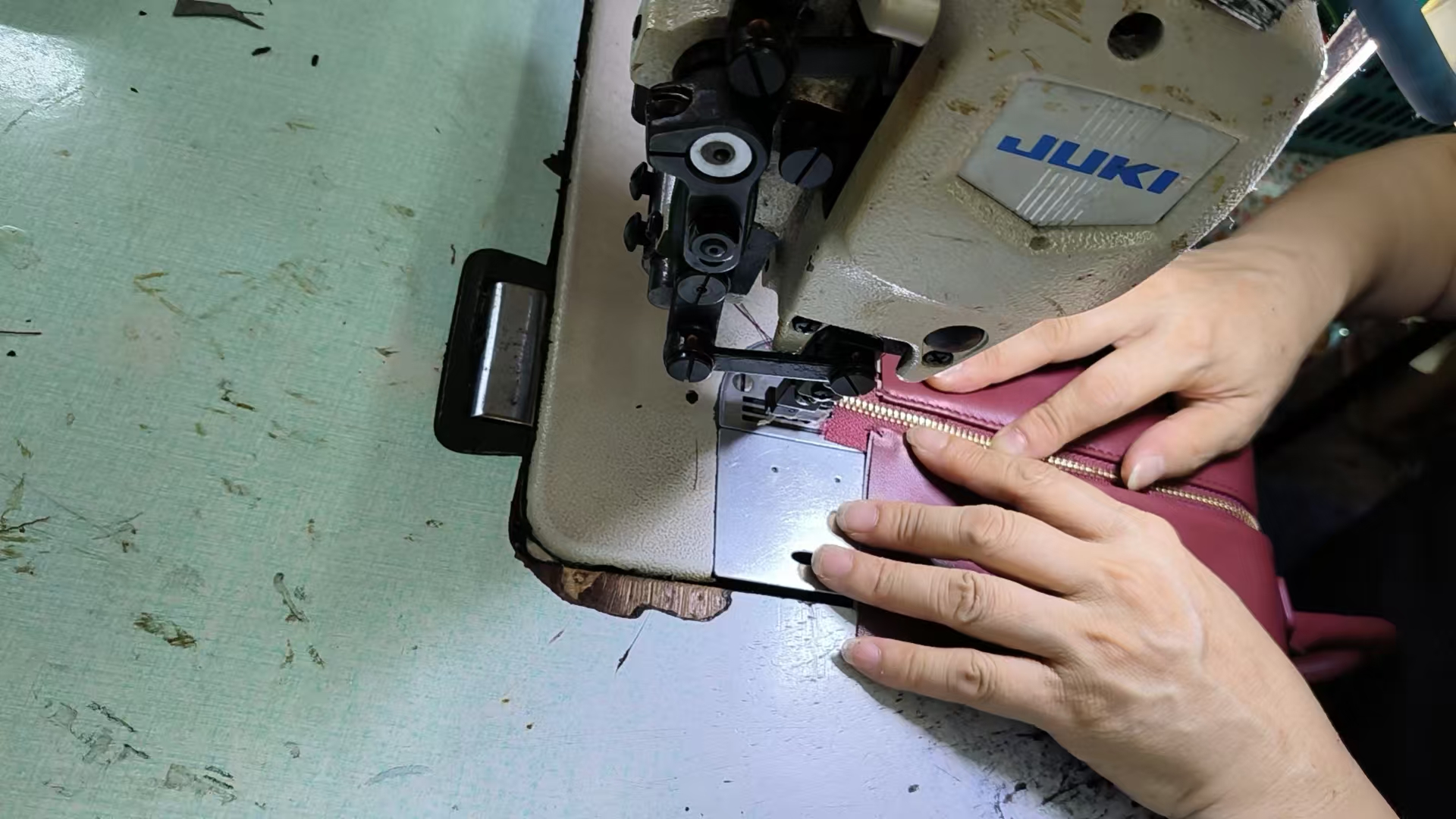
The sample maker cuts, skives, glues, stitches, assembles hardware, and finishes the bag.
Internal Inspection & Adjustments
1–3 Days
The development team reviews the sample before shipping.
Faster Isn't Always Better
Some suppliers advertise 5–7 day sampling.
This may be realistic for:
- Existing styles
- Minor modifications
- Simple cosmetic bags
- Basic tote bags
However, for fully customized handbags, rushing often creates additional revisions later.
Example: A "Fast Sample" That Took Longer
One buyer chose a supplier that promised a 7-day sample lead time.
The sample arrived quickly but had:
- Incorrect hardware
- Wrong lining material
- Missing internal compartments
The project ultimately required two additional rounds of revisions.
Although the first sample arrived faster, the final approved sample took much longer.
The Most Successful Projects Start With Complete Information
The best handbag developments happen when buyers provide:
- Technical packs
- Dimension sheets
- Material specifications
- Hardware requirements
- Logo artwork
- Reference samples
Every detail provided at the beginning reduces uncertainty later.
In handbag manufacturing, speed is important.
But accuracy is even more important.
Final Thoughts
When a handbag factory asks detailed questions before sampling, it is not trying to slow down the project.
It is trying to prevent costly mistakes.
The reason professional handbag samples typically require 15–20 days is simple:
Good development takes time.
And in most cases, spending a few extra days at the beginning saves weeks of revisions later.