-1.png?w=800&h=800)
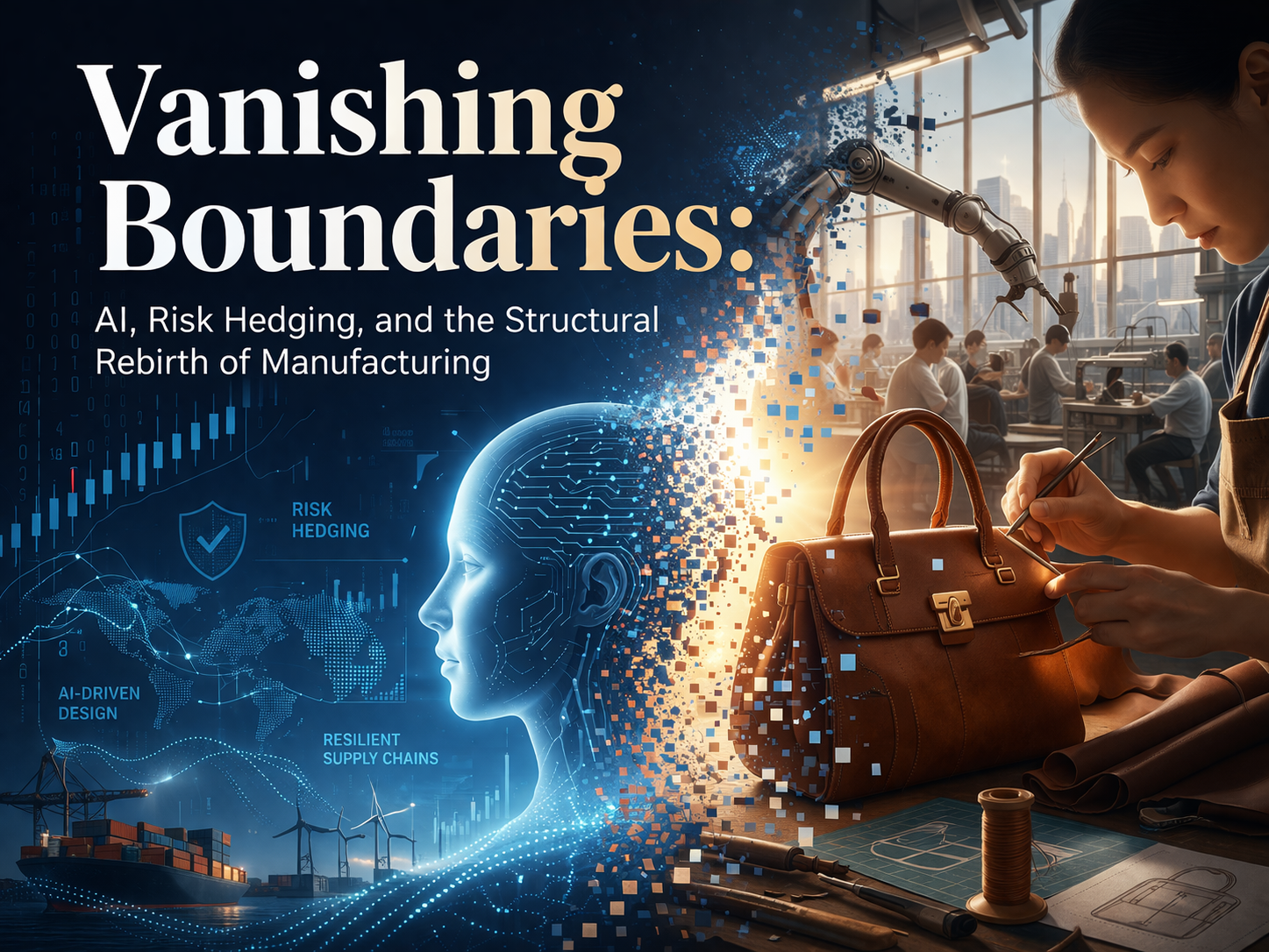
The traditional logic of the handbag industry is undergoing a profound shift. AI enables an instant explosion of design inspiration, while market uncertainty drives orders toward fragmentation. This collision between "high-frequency design" and "flexible manufacturing" is redefining the core of the supply chain.
1. Visual Mirage vs. Structural Feasibility
AI tools have significantly lowered the barrier to design, allowing startups to produce visual concepts with near-perfect aesthetics. Though their generated hardware or some structures are still unreal and uneasy to understand.
However, AI excels at synthesis but often lacks physical logic. It tends to overlook stress points, material thickness, and structural balance in 3D space.
For a factory, these images are not the conclusion of R&D—they are the beginning of a complex "translation project." The manufacturer acts as the final guardian of physical feasibility.
2. Low MOQ: From Initial Testing to Industry Hedging
In the past, Low MOQ was seen as a necessity for startups. Today, it has evolved into a rational hedging strategy for professional buyers.
To counter volatile trends and inventory pressure, seasoned buyers are adopting "small-batch, high-frequency" testing to mitigate market risk. As Low MOQ becomes a universal language, factories must pivot from "economies of scale" to "precision response," finding new profit points within fragmented order flows.
3. The Underestimated "Technical Translation Cost."
During peak development seasons, the true bottleneck is rarely the production line—it is the communication at the sales desk.
Sales teams expend immense energy "compiling" poetic AI prompts into technical specs for cost analysts and pattern makers. This high "communication tax" forces factories to filter clients based on their clarity and intent.
In the AI era, the ability to engage in professional technical dialogue with the supply chain has become a core brand strength.
4. Strategic Shift: From Execution to Incubator
This shift represents a redistribution of power within the supply chain. As "designing" becomes commoditized, the ability to "materialize" becomes a premium asset.
-
Technical Premium: Solving structural flaws in AI designs turns factories from vendors into technical partners with deep client loyalty.
-
The Data Advantage: Processing high volumes of AI inquiries provides real-time access to global trend data, allowing factories to anticipate market shifts.
-
Efficiency as a Moat: Factories that optimize their workflow to handle small batches can exit price wars and capture high-margin, high-growth markets.
Final Words: The Supply Chain as a Laboratory
AI shortens the gap between an idea and an image, but it cannot bridge the physical gap between an image and a product.
The core competitiveness of the future is "translation"—the ability to turn vague digital inspiration into high-quality physical reality.
The supply chain is no longer just a backend service; it is a core asset defining a brand's vitality.