-1.png?w=800&h=800)
On May 15th, a new customer suddenly contacted us through WhatsApp.
He was in Guangzhou at the time, building a startup handbag brand, and urgently looking for a supplier who could help turn his idea into a real product.
At that moment, nothing was finalized yet.
No confirmed dimensions.
No finalized materials.
No tech pack.
No factory-ready specifications.
Just an idea, a rough vision, and a very tight deadline:
He hoped to receive the sample and bring it back overseas by May 26th.
For many people outside manufacturing, this might sound reasonable.
But inside a factory, this immediately triggers a different calculation:
How many actual working days are truly available?
And more importantly:
What parts of the process are invisible to the customer?
The Hidden Reality Behind “Quick Sampling”
After the customer contacted us on Friday, we immediately began preparing for his visit.
Before leaving work that afternoon, our team rushed to gather the materials, references, and sample bags he might want to see the next day.
On Saturday, from around 3 PM until after 6 PM, we hosted him at the factory.
Together with our boss, we discussed:
- pricing
- construction details
- bag proportions
- handle length
- leather texture
- sample lead time
Because this was his first custom bag project, even the dimensions were finalized on-site using existing bags from our sample room as references.
This is actually very common with startup brands.
Many first-time founders believe product development starts after production begins.
But in reality:
Development starts the moment decisions begin.
And those decisions take time.
The Customer Saw 11 Days. The Supply Chain Saw 4.
From the customer’s perspective:
- May 15: Initial contact
- May 16: Factory meeting
- May 26: Receive sample
That feels like 11 days.
But factories calculate time differently.
Because supply chains do not run on calendar days alone.
Inside those 11 days were:
- weekend downtime
- material confirmation
- leather supplier lead time
- CAD development
- pattern making
- sample construction
- transportation coordination
- possible revisions
The actual workable production window was probably closer to:
4–5 effective working days.
This is one of the biggest misunderstandings in modern product development.
Customers often see the finished bag.
Factories see the entire chain required to make it possible.
The Biggest Problem Was Not Sewing — It Was Material Availability
On May 16th, after confirming details with the leather supplier, we encountered the real issue.
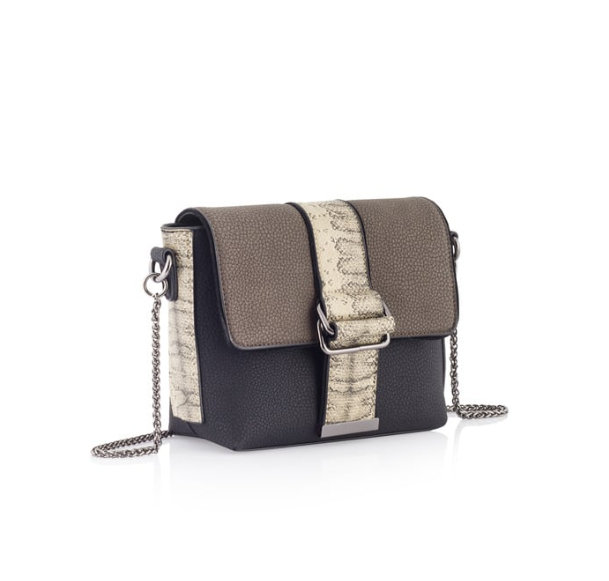
The customer selected a snakeskin-pattern genuine leather.
But the supplier informed us:
There was no ready stock available.
The material would need custom production, with a lead time of approximately 7–10 days.
Immediately, the original timeline became impossible.
And this is where many factories make a critical mistake.
Some suppliers, eager to secure the order, would simply say:
“No problem, we can rush it.”
But experienced manufacturers know this usually leads to:
- delayed sampling
- quality compromises
- communication breakdowns
- damaged trust
Instead of blindly promising impossible timelines, we proposed a different strategy.
Why We Suggested an Alternative Material First
Rather than insisting on the final leather immediately, we suggested using a similar in-stock snakeskin genuine leather to quickly build the first sample.
The purpose was simple:
Validate the structure first.
Because for a first prototype, the most important things are usually:
- shape proportion
- carrying comfort
- pocket placement
- zipper usability
- silhouette balance
- overall construction logic
Not whether the exact final leather is already available.
Fortunately, the customer understood and agreed.
This allowed development to continue instead of completely stalling.
And honestly, this reflects one of the most important abilities in modern manufacturing:
Fast substitution capability.
Not low price.
Not huge factory size.
Not aggressive promises.
But the ability to rapidly adjust when reality changes.
Modern Supply Chains Are No Longer About “Production Capacity” Alone
Ten years ago, factories competed on:
- machine quantity
- factory size
- labor cost
- MOQ
Today, the market is changing.
Brands launch faster.
Social media trends move faster.
Product cycles are shorter.
Small-batch testing is becoming normal.
Many new brands are not planning collections 12 months in advance anymore.
Instead, they operate like this:
“We have an idea now. Can we launch quickly?”
That means factories are no longer just manufacturers.
They are becoming:
Development partners.
In this project alone, our role was not simply sewing bags.
We were:
- helping define dimensions
- balancing timeline risks
- coordinating suppliers
- restructuring the sampling process
- managing feasibility
- adjusting development priorities
This is a completely different kind of manufacturing relationship.
Another Important Detail: Managing Expectations Honestly
After the meeting, the customer also began pushing for CAD drawings immediately.
But we had already informed him clearly:
Our factory does not operate on Sundays, and the earliest CAD preview would likely be May 18th or 19th.
This may sound simple.
But expectation management is one of the most overlooked parts of supply chain communication.
Many suppliers create problems by:
- overpromising
- replying emotionally under pressure
- giving unrealistic timelines
- pretending everything is “easy”
In reality, transparent communication is far more valuable.
Especially for startup founders who are entering manufacturing for the first time.
Because what they often lack is not passion.
It is understanding of how industrial development actually works.
Small Orders Often Require the Most Intensive Coordination
Ironically, smaller startup projects are often more demanding than large production orders.
Because these projects usually involve:
- incomplete specifications
- evolving ideas
- urgent deadlines
- no standardized tech packs
- no established material systems
- ongoing decision changes
Which means the factory must contribute far more:
- communication
- flexibility
- development guidance
- supplier coordination
- technical interpretation
This is why experienced manufacturers understand something important:
Small orders are not always “small cost.”
Sometimes they require the highest level of operational responsiveness.
Final Thoughts
This project may eventually become just one small handbag sample.
But the process behind it reflects something much bigger happening across the manufacturing industry.
Modern supply chains are no longer judged only by how cheaply they produce.
They are judged by:
- how quickly they respond
- how transparently they communicate
- how realistically they manage risk
- and how flexibly they adapt when plans change
Because in today’s market, speed without coordination creates chaos.
And coordination without honesty creates failure.
The best factories are no longer simply producing products.
They are helping ideas survive reality.